
Restaurants
Menu Engineering: Design a Menu That Sells Your Best Dishes
Founder of transfactor.dev and SafestMenu, building software for restaurants he actually eats at.
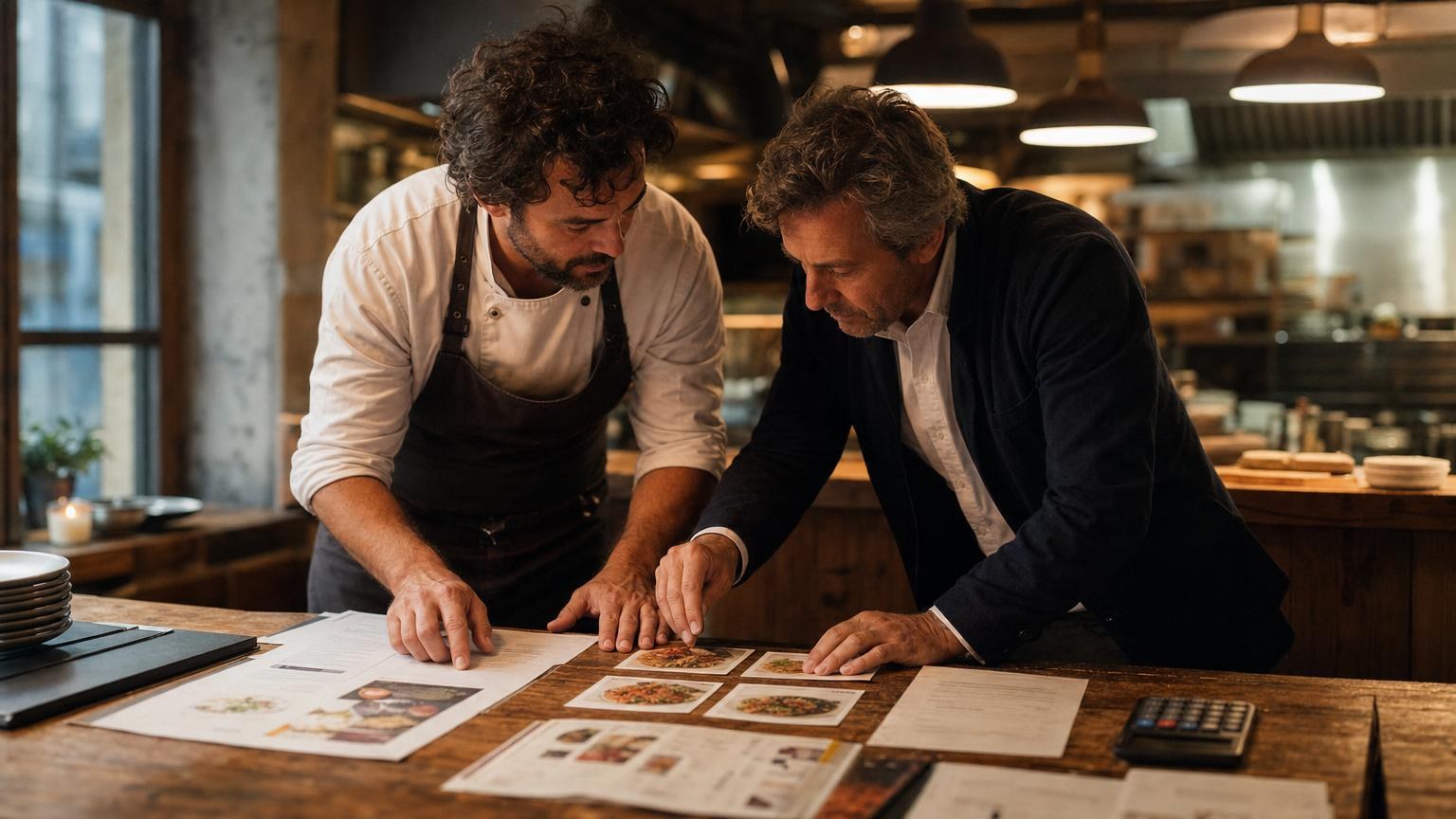
I once sat with an owner in Manchester who'd redesigned his menu three times in two years, always for the same reason: it "looked tired." Not once did any of those redesigns start from his sales data. When we finally pulled the numbers, his highest-margin dish, a duck dish, sold about six times a month, buried in a nine-item mains list. His lowest-margin dish, a burger that barely broke even after a bun price rise, was his top seller by a wide margin, sitting exactly where every eye lands first.
That's not a design problem. That's a menu engineering problem, and it's the kind that costs real money every service, quietly, because nothing about it looks broken.
What menu engineering is
Menu engineering is the practice of scoring every dish on two numbers instead of one: how much profit it makes you, and how often guests order it. Cross the two (profitability x popularity) and you find out which dishes are actually working for your business, as opposed to which ones you just assume are working because they've always been on the menu.
The "profit" side isn't your sale price, it's your contribution margin: sale price minus the cost of the ingredients in the dish. A steak priced well above its food cost contributes more to your bottom line than a pasta dish priced only slightly above its food cost, even if the steak looks like the bigger win on the page. The "popularity" side is simply how often a dish gets ordered relative to everything else on the menu over a given stretch, a month is usually a sane window to work with.
Neither number alone tells you much. A dish that's wildly popular but barely profitable is quietly draining you every time someone orders it. A dish that's hugely profitable but almost never ordered isn't helping you either, it's dead weight taking up a line on the page. Menu engineering is what happens when you finally look at both numbers at once. The idea has been kicking around hospitality consulting since the 1980s, and the underlying logic hasn't needed updating since, only the tools have.
The menu engineering matrix
Plot every dish on a simple two-by-two: profitability on one axis, popularity on the other. Where a dish lands tells you exactly what to do with it.
Stars, Plowhorses, Puzzles, Dogs
Stars - high profit, high popularity. These dishes are earning their place on your menu. Protect them: keep the recipe consistent, don't let the food cost creep up unnoticed, and give them the best real estate on the page so new guests find them fast.
Plowhorses - high popularity, low profit. Guests love these, and that's exactly the problem: you're selling a lot of something that barely pays for itself. Don't just push the price up and risk complaints. Look first at whether the food cost can come down without anyone noticing, a slightly smaller portion of a pricier garnish, a supplier swap, and only then consider a small, gradual price move. Our guide to restaurant menu pricing walks through how to raise a price without a guest feeling like they got less for it.
Puzzles - high profit, low popularity. These dishes make you good money on the rare occasion someone orders them, so the job isn't to fix the dish, it's to fix the visibility. Move it, describe it better, have staff mention it, put it somewhere a scanning eye actually lands. A puzzle that starts getting ordered more often turns into a star without you touching the recipe or the price at all.
Dogs - low profit, low popularity. Nobody orders them, and they don't make money on the rare order either. Dogs earn their keep only by taking up space on the page and adding one more line to the kitchen's prep list. Cut them, or fold whatever's good about them into a dish that's already working.
The bottom line: you don't need to guess which dishes deserve a redesign or a price change. The matrix tells you, straight from your own sales data, not from which dish you personally like best.
Running the actual numbers takes one sitting. Pull sales data for a month, then work out each dish's contribution margin (price minus food cost) and its share of total orders. A common rule of thumb: if a dish's order share is at least 70% of what it would get if every dish on the menu sold exactly evenly, count it as "popular." Anything above your menu's average contribution margin counts as "profitable." Four quick checks per dish, one clear quadrant each.
Design tactics that move the needle
Once you know which dishes deserve the spotlight, menu psychology decides whether guests actually find them.
- Placement. Guests scan a page, they don't read it top to bottom like a novel. The first and last items in a list, and the upper area of a page, get read first and remembered longest. Put your stars there, not wherever they happened to land alphabetically.
- Anchoring. A single higher-priced item near the top of a section makes everything below it look reasonably priced by comparison, even the dishes you actually want to sell more of.
- Descriptions that sell, not just describe. "Chicken breast" tells a guest nothing. "Slow-roasted chicken breast, crisp skin, lemon and thyme jus" tells them what they're about to taste. The words matter more than most owners expect, and so do the photos next to them. We cover when a dish photo genuinely helps versus when it cheapens the page in restaurant menu photos: help or hurt.
- Drop the currency signs. A price written as "18" reads differently to a guest's brain than "$18.00" does. Removing currency symbols and trailing zeros is one of the better-known small tweaks in menu psychology, and it costs nothing to try.
- Fewer choices per section, not more. A twelve-item mains list doesn't help anyone decide, it just pushes guests toward whatever they already recognize, usually the cheapest thing on the page. Trim the list and your stars get a fairer share of attention.
Menu engineering on a digital / QR menu
Everything above used to mean a reprint. Test a new dish position, reprint. Try a better description, reprint. Realize the anchor item isn't working, reprint again. That cycle is exactly why most independent restaurants ran menu engineering once, if ever, and never touched it again.
A QR menu removes the reprint step entirely. In the SafestMenu editor, reordering your menu is a drag-and-drop, not a print job, so testing whether your duck dish sells better second in the list or first takes thirty seconds, not a trip to a print shop. Prices update the same way, live at the next scan, which makes the slow, careful price moves on a Plowhorse dish actually practical instead of something you keep postponing. We get into that specific delay in updating menu prices without the drama.
The part print genuinely can't touch: SafestMenu shows you simple stats on which dishes guests view most, so you're running the matrix on real numbers instead of gut feel about which dish "seems popular." And because duplicating a whole menu takes one click, you can keep a working version live for guests while you test a rearranged one, then decide with data instead of a hunch.
A simple monthly menu-engineering routine
You don't need a consultant or a spreadsheet habit to know how to increase menu sales - just a routine you actually run. Once a month:
- Pull order counts and, if your till or POS gives it to you, food cost per dish for the last 30 days.
- Sort every dish into a Star, Plowhorse, Puzzle, or Dog using the popularity and profitability check above.
- Pick one action per Puzzle: better placement, a rewritten description, or a staff mention, and make the change.
- Pick one action per Plowhorse: a small cost reduction or a small price move, not both in the same month.
- Cut or rework your worst two Dogs. Don't cut more than that in one pass, guests notice when a menu shrinks too fast.
- Leave your Stars alone except to protect their food cost and their spot on the page.
- Check back in 30 days and see what moved.
FAQ
What is menu engineering? Menu engineering is scoring every dish on your menu by two numbers, contribution margin (profitability) and order frequency (popularity), then using where each dish lands to decide what to promote, reprice, redesign, or cut.
What is the menu engineering matrix? It's the two-by-two grid that comes out of that scoring: Stars (high profit, high popularity), Plowhorses (low profit, high popularity), Puzzles (high profit, low popularity), and Dogs (low profit, low popularity). Each quadrant points to a different action.
How do I make my menu more profitable? Start with your Plowhorses and Puzzles. Plowhorses need a careful cost or price adjustment; Puzzles need better visibility, not a lower price. Fixing those two categories does more for your menu profitability than anything else you could change today.
Does menu engineering work for small restaurants? Yes, arguably more than for large ones. A ten-dish menu is easier to fully analyze in an afternoon than a ninety-item one, and a single Puzzle getting properly promoted can meaningfully shift a small restaurant's monthly numbers in a way it wouldn't for a chain with hundreds of locations averaging out the noise.
Put your best dishes front and centre
A menu that's never been engineered isn't neutral, it's quietly working against your margins every single service, in a way that never shows up as one single bad decision. Once your menu lives on a QR code instead of a printed page, testing a new dish position or a rewritten description costs a few minutes instead of a reprint bill. Your first menu, five dishes, is free, no card required. Build it at app.safestmenu.com and put this month's Stars where guests will actually see them.