Restaurants
Do Restaurant Menu Photos Help or Hurt Sales?
Product and QA at SafestMenu, making sure every menu edit shows up right before a guest ever sees it.
I once watched a guest in a small place near the old town scroll past a photo of what was meant to be sarmale. It looked like a plate of wet cardboard under fluorescent light. She closed the menu and ordered the pizza instead - a dish she already knew, from a picture she didn't need. That's the moment I started paying real attention to restaurant menu photos: not whether a menu has them, but whether they're actually doing any good.
Because photos aren't neutral. A good one gets someone to order a dish they'd never have picked from the name alone. A bad one does the opposite, making food look worse than a plain text description ever would - and once a guest doubts the photo, they start doubting the kitchen too.
When menu photos genuinely help
The clearest case for photos is any dish a guest can't picture from the name. If a chunk of your tables are tourists, or the menu has regional dishes with no obvious translation, a photo does more work in half a second than a sentence of description ever could. Nobody wants to be the person who ordered something they can't identify and hopes for the best.
Photos also help with dishes that sound plain but look great - a stacked burger, a loaded board for two, anything with visible texture or color. Unfamiliar or dressed-up dishes are where a photo earns its space on the page.
The bottom line: if a guest would need to ask a server "what is that, exactly," a photo answers the question before they have to.
When photos start to feel cheap
Now the other side: walk into most fine dining rooms and you won't find a single photo. That's not an accident, it's a signal. The menu is trusting you to know what "duck, celeriac, cherry" means, and a glossy photo next to it would look like it belongs on a fast food board, not a tasting menu.
Photos also hurt when they're stretched, over-saturated, or clearly stock images that don't match what actually lands on the table. A guest who orders the beautiful photo and gets a smaller, greyer version feels tricked, even if nobody meant to trick them. That gap between the picture and the plate is the fastest way a photo turns a sale into a complaint.
What separates an appetizing photo from a harmful one
When we tested menu photos across different restaurants, the difference between "makes me hungry" and "makes me suspicious" came down to three things.
- Light: natural or soft, diffused light beats a flash or a dim bulb almost every time. Yellow-tinted kitchen light makes even good food look tired.
- The plate itself: use the actual plate your kitchen serves on, in the actual portion size. Not a styled bowl that's twice the size of what goes out.
- Honesty: the photo should look like the dish, garnish and all, on a normal Tuesday, not the one perfect version the chef plated for the camera.
Get those three right and a photo sells the dish. Get any one wrong and it just sets up a disappointment later.
Three ways to get decent restaurant menu photos without a studio budget
You don't need a photographer on retainer to get this right. Most owners we talk to land on one of three options.
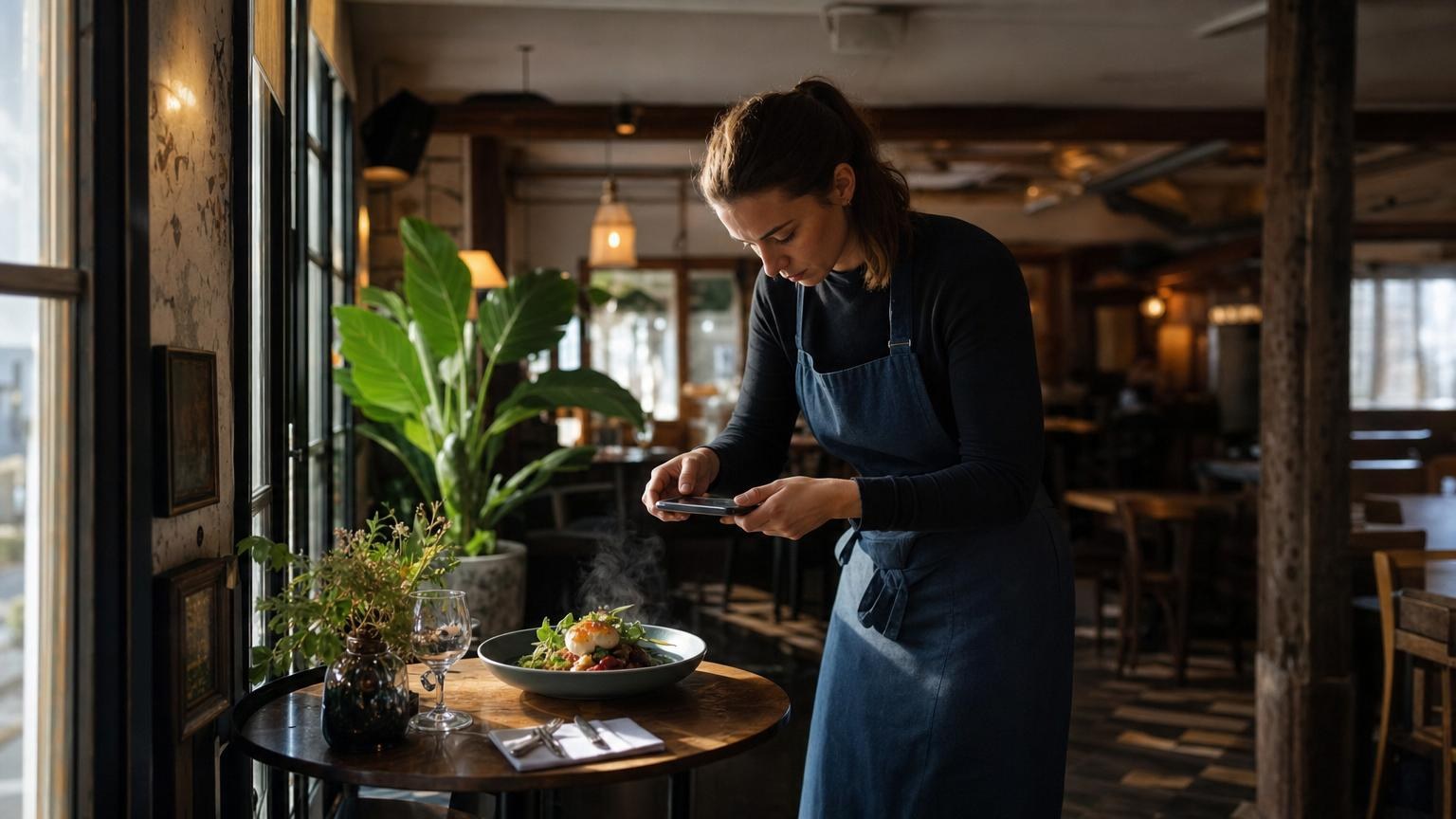
- Shoot it yourself. Use daylight near a window, turn off the flash, shoot from a 45-degree angle, and wipe the plate rim before you shoot. Ten minutes per dish is usually enough for something usable.
- Hire a local photographer for a batch. One afternoon covering your whole menu is cheaper than it sounds, and it's worth it if photos are central to how you sell, think brunch spots or dessert-heavy menus.
- Generate the photo, then check it against the plate. This is where AI Studio in SafestMenu comes in. It can generate a photo for a dish straight from the description. We treat every result the same way: hold it up next to the real plate and ask if a regular could tell the difference. If the garnish is wrong or the portion looks inflated, we redo it or skip the photo entirely. An AI photo nobody's checked is exactly the stretched stock image problem from before, just made in-house.
Whichever route you pick, the same rule holds: a photo only earns its spot if it looks like what actually leaves the kitchen. If your menu photos need to work harder because guests can't read the dish name either, translating your menu without the embarrassing mistakes is worth doing alongside them, and if you're still setting up the menu itself, QR code menu best practices covers the layout mistakes we see most.
Menu photos aren't a nice-to-have or a red flag on their own. They're a tool that works for some dishes and some dining rooms, and backfires in others. If you want to test that on a real menu, SafestMenu lets you build your first menu, five dishes, free, so you can see for yourself whether photos help before you add them to the rest.