Restaurants
The 14 Allergens List Every UK Menu Must Declare
Product and QA at SafestMenu, making sure every menu edit shows up right before a guest ever sees it.
Every few weeks someone asks us, almost apologetically, "wait, is it 14 allergens or is that just the EU ones?" It's a fair question, because half the internet says 14, some older UK guidance says 12, and nobody explains why the number matters. It matters because a menu that guesses at the list, instead of checking it, is the fastest way to get a serious allergy wrong.
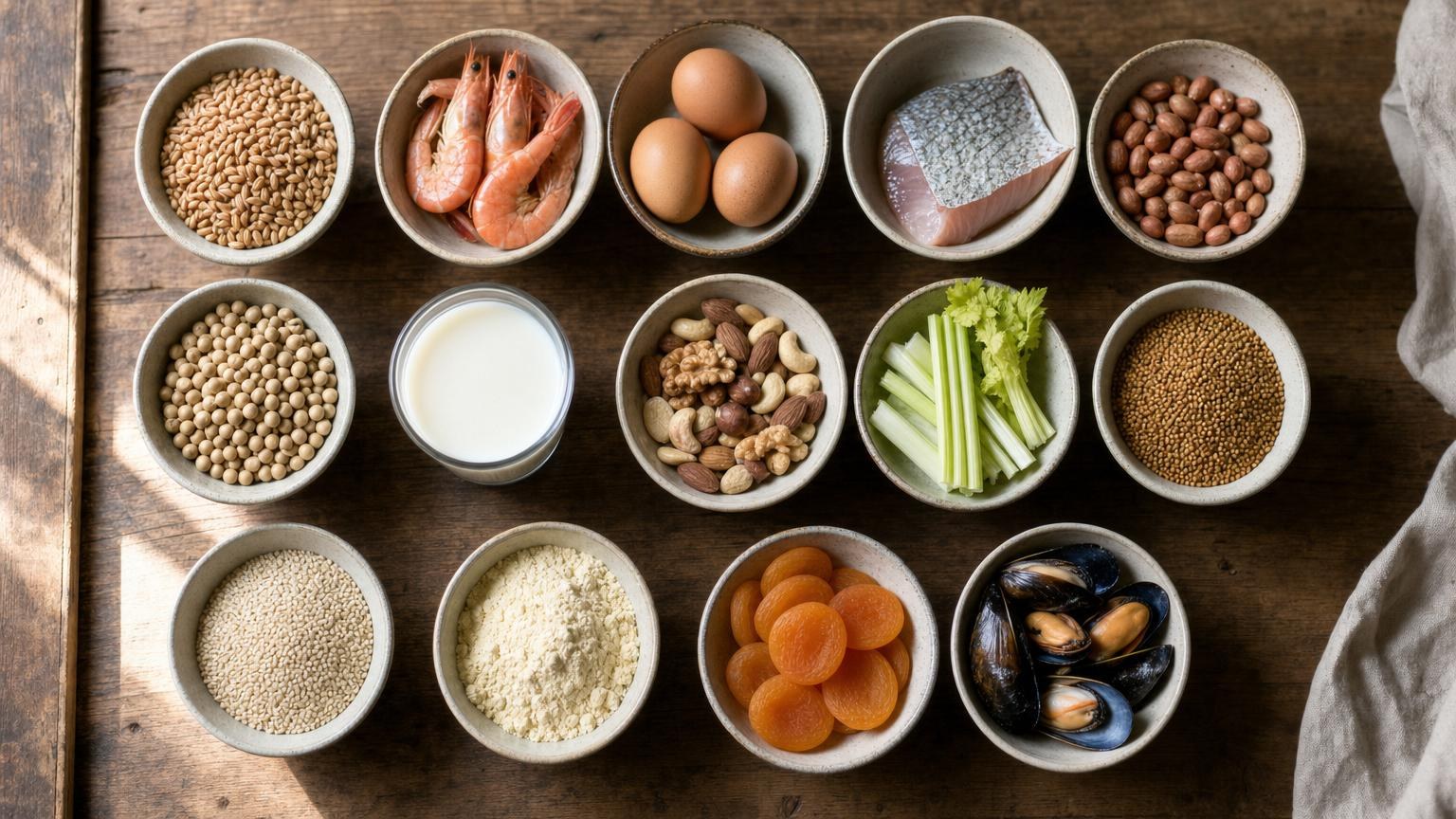
The 14 allergens list is not a suggestion or a rough guide. It's the fixed set of ingredients that UK and EU food law requires you to be able to identify in every dish you serve, by name, on request or in writing. Fourteen, not twelve, not "the common ones." Here's the full list, where each one actually hides on a working menu, and what you're required to do about it.
The full 14 allergens list
These are the 14 allergens set out in Annex II of EU Regulation 1169/2011. The UK carried the same list into domestic law through the Food Information Regulations 2014, and it stayed unchanged after Brexit. Listed alphabetically, the way most reference charts present them:
- Celery - including celery stalks, leaves, seeds, and celeriac. Hides in stock cubes, soups, and spice mixes.
- Cereals containing gluten - wheat, rye, barley, oats, spelt, kamut and their hybrids. Hides in sauces, batter, soy sauce, and as a thickener in soups.
- Crustaceans - prawns, crab, lobster, crayfish. Hides in Thai and Southeast Asian pastes (shrimp paste), stocks, and paella.
- Eggs - hides in mayonnaise, pasta, glazes on bread, and as a clarifying agent in some stocks and wines.
- Fish - hides in Worcestershire sauce, Caesar dressing (anchovy), fish sauce, and some stocks used for "vegetarian" dishes by mistake.
- Lupin - a legume flour used in some gluten-free and Mediterranean breads, pastries, and pasta.
- Milk - hides in butter, cream, some breads and doughs, and as a base for many pre-made sauces.
- Molluscs - mussels, squid, oysters, scallops, snails. Hides in oyster sauce, some fish stocks, and paella again.
- Mustard - hides in dressings, marinades, curry powders, and some breads.
- Nuts - specifically tree nuts (almonds, hazelnuts, walnuts, cashews, pecans, brazils, pistachios, macadamias, queensland nuts). Hides in pesto, some oils, baked goods, and as a garnish added late that never makes it onto a printed menu.
- Peanuts - a legume, not a tree nut, and legally listed separately from nuts. Hides in satay sauce, some Asian dressings, and peanut oil used for frying.
- Sesame - hides in hummus, tahini, some breads (sesame seeds baked into the crust), and as a finishing oil.
- Soybeans - hides in soy sauce, miso, tofu, and as an emulsifier in processed sauces and some bread doughs.
- Sulphur dioxide and sulphites - present above 10mg/kg or 10mg/litre. Hides in wine, dried fruit, some sausages and cured meats, and pickled vegetables.
That's the complete list of 14 food allergens - what most people mean when they say the "top 14 allergens." If a dish contains any of these, in any quantity above the legal threshold, you have to be able to say so.
Where these allergens hide on a typical menu
The allergens that cause real problems are rarely the obvious ones. Nobody misses the shellfish in a prawn cocktail. What catches kitchens out is the allergen that arrived as an ingredient in another ingredient, three steps removed from the dish name.
A few patterns we see constantly:
- Stock as a silent carrier. A "vegetable" soup made with a stock cube that lists celery, or a stock that was actually chicken-and-fish based because that's what the kitchen had on hand that morning. The dish name says nothing about it.
- Sauces bought in, not made in-house. Mayonnaise (egg), pesto (nuts), Worcestershire sauce (fish, gluten), soy sauce (soy, gluten) - all of these get added to dishes that don't sound like they'd contain them.
- Wine and dried fruit for sulphites. Almost all wine served by the glass contains sulphites above the labelling threshold, and it's one of the most commonly forgotten of the 14 because it doesn't feel like a "food" allergen.
- Garnishes and finishing touches. A scattering of toasted sesame seeds or chopped nuts added at the pass, after the dish left the kitchen's written recipe, is exactly the kind of thing that never makes it onto a printed allergen chart because the chart was written before that habit started.
- Cross-contamination in a shared fryer. Chips fried in the same oil as battered fish or a nut-crusted item aren't "made with" fish or nuts, but a severely allergic guest still needs to know.
The common thread: the allergen is real, the risk is real, but it's not written down anywhere a server can point to under pressure. That's a systems problem, not a knowledge problem.
How to show the 14 allergens on your menu
The legal minimum, under the Food Information Regulations 2014, is that you must be able to tell a guest, on request, which of the 14 allergens are present in any dish you sell, before they order. For pre-packed food sold on-site (like grab-and-go sandwiches), the allergens must actually be labelled on the pack.
For a table-service or counter menu, that legal minimum can be met with a sign saying "ask a member of staff about allergens" backed by an accurate reference chart in the kitchen. In practice, that's the weakest version of compliance, because it depends entirely on whoever's on shift knowing the answer, correctly, in the moment.
The clearer, safer option is to mark allergens directly on the dish, so the guest sees the information before they ever have to ask. That's the approach we built into SafestMenu: every dish gets its allergens ticked once, from the fixed 14, and the mark shows on the menu itself, in whichever of six languages the guest is reading it in. When a recipe changes, you untick a box, and it's updated everywhere instantly, no reprinting, no re-briefing staff. We've written a full walkthrough of that workflow in how to add allergens to your menu without the sticky notes, if you want the practical side of setting it up.
Whichever method you use, the one thing that has to survive is accuracy over time. A correct chart on the day it was printed and a wrong chart six recipe-changes later carry the exact same legal risk, because nobody checks the printing date before they order.
The 14 allergens vs "may contain"
The 14 allergens list covers what's deliberately in a dish, as an ingredient. "May contain" warnings are a separate, voluntary thing: a business's own precautionary note about cross-contamination risk in a shared kitchen (a nut-free cake made in a bakery that also handles nuts, for example).
The 14 allergens are a legal requirement to disclose. "May contain" labelling is not legally mandated for restaurants in the same way, it's a risk-management choice a kitchen makes when it can't guarantee separation. The two get confused because both show up as small print near a dish, but only one of them is the law telling you what to say. Getting cross-contamination handling right, including when to add a "may contain" caveat, is its own topic, and we'll be covering it in more depth soon.
FAQ
What are the 14 allergens? Celery, cereals containing gluten, crustaceans, eggs, fish, lupin, milk, molluscs, mustard, nuts, peanuts, sesame, soybeans, and sulphur dioxide/sulphites. This is the full list under EU Regulation 1169/2011 and UK food information law.
Are the 14 allergens the same across the UK and EU? Yes. The UK adopted the EU's list of 14 allergens through the Food Information Regulations 2014 and kept it unchanged after Brexit, so a menu compliant with the 14-allergen list works the same way on both sides of the Channel.
Do I have to list all 14 on my menu? You have to be able to tell a guest which of the 14 are present in a specific dish, before they order. You don't have to print every allergen on every menu item if you don't want to, as long as you have an accurate, accessible way for a guest to get that information, whether that's a chart, a conversation with staff, or marks directly on a digital menu.
What's the difference between the 14 allergens list and Natasha's Law? The 14 allergens list is the set of ingredients you have to identify. Natasha's Law is a specific UK rule about how pre-packed-for-direct-sale food (like a sandwich made on-site and put in a sealed package) must be labelled, requiring full ingredient and allergen labelling on the pack itself. They work together, but they're not the same rule. We cover the pre-packed side in detail in our guide to Natasha's Law for restaurants.
Is this legal advice? No. This is a practical summary based on current UK and EU food information law, written for restaurant owners, not a substitute for legal advice. Your obligations can depend on specifics we can't see from here, so for a compliance question tied to your own menu or an incident, check the FSA's own guidance or talk to your local environmental health team.
Keep your allergen list accurate everywhere
Knowing the 14 allergens is the easy part. The hard part is keeping the answer correct on a Tuesday when the stock recipe changed and nobody updated the laminated card behind the bar. If you want a single source of truth that guests can check themselves, in their own language, before they order, build your first menu at app.safestmenu.com. Your first menu, five dishes, is free, no card required, and every allergen mark stays attached to the dish, not to whoever's memory you're trusting that shift.
If you manage allergens across a bigger menu with multiple variants and modifiers, our allergen matrix tool gives you a full grid view of all 14 allergens against every dish, so gaps are visible at a glance instead of discovered mid-service.