
Restaurants
Natasha's Law Explained: What Restaurants and Cafes Must Do
Product and QA at SafestMenu, making sure every menu edit shows up right before a guest ever sees it.
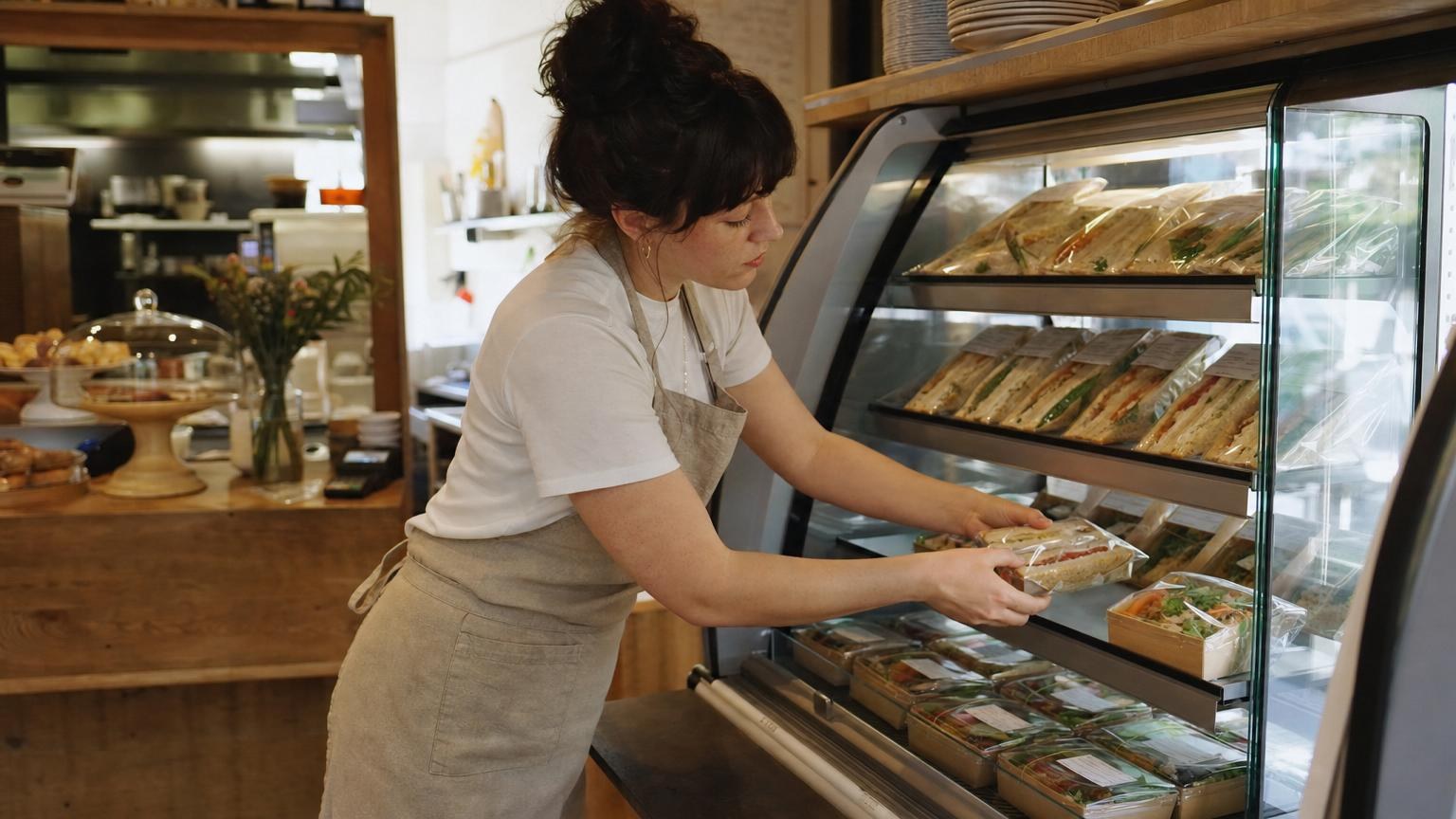
Natasha's Law exists because of a 15-year-old named Natasha Ednan-Laperouse, who died in 2016 after eating a baguette bought from a shop that didn't have to list its ingredients on the packaging. The sesame that killed her was baked into the dough. It just wasn't written down anywhere she could read before she ate it.
That's the part restaurant and cafe owners tend to miss when they hear "Natasha's Law" and assume it's someone else's problem, a big chain's problem, a sandwich-shop problem. If your kitchen packages any food on the premises before a guest picks it up or orders it - a grab-and-go sandwich case, a bakery counter, a fridge of pre-boxed salads by the till - this law is about you, not just the chains it made headlines for.
What Natasha's Law is, in plain English
Natasha's Law is the everyday name for a set of rules that came into force on 1 October 2021, following the Food Information (Amendment) (England) Regulations 2019, with matching amendments across Scotland, Wales, and Northern Ireland. Officially, it's about PPDS labelling: prepacked for direct sale. In practice, it means that if you make food on your premises and package it before a customer selects it or orders it, that package needs a full ingredients list on it, with the 14 major allergens clearly emphasised, printed right on the label itself.
Before this law, that kind of food only needed allergen information to be available somewhere nearby - a chalkboard, a folder behind the counter, a verbal answer from whichever staff member happened to be free. After it, the label has to carry the information every time, without anyone needing to ask.
What counts as PPDS (prepacked for direct sale)
This is the distinction most owners get wrong, and it isn't about what the food is. It's about when it was packaged relative to the customer choosing it.
Food is PPDS if it's packed on your premises before a customer selects or orders it, in packaging that means the contents can't be changed without opening or breaking it. Common examples:
- Sandwiches made in the morning, wrapped, and placed in a chiller for guests to pick up themselves
- Salads boxed and displayed in a deli cabinet
- Pastries or traybakes bagged and set out on a bakery counter
- Sushi assembled in-house and sealed into boxes before they go on display
Food is not PPDS if it's packaged after the customer has already chosen or ordered it. A sandwich made to order at the counter and then wrapped to go isn't PPDS. A meal cooked when a table orders it and boxed up for takeaway afterward isn't PPDS either. The FSA's own guidance uses that same test: was it packed before the choice was made, or after?
That second category doesn't mean allergen information is optional. It just means it's governed by different rules, which we get into below.
What the label must show
A PPDS label needs two things, and both are non-negotiable under Natasha's Law requirements:
- A full ingredients list, in descending order by weight, exactly as standard food labelling already requires.
- The 14 major allergens emphasised within that list, so a guest scanning the label can spot them without reading every word. In practice that usually means bold text, capitals, or a different colour, for example MILK standing out inside an otherwise plain ingredients list. If you're not confident on what the full 14 actually are, our breakdown of the 14 allergens covers each one with examples of where it tends to hide.
The label also needs the name of the food, and standard food-labelling rules on top of Natasha's Law may require the business's name and address too, depending on your packaging - check with your local environmental health team or the FSA's guidance if you're unsure what applies to your setup. What it doesn't need is a separate allergen chart or a QR code as a substitute: the label itself has to carry the ingredients and allergens, full stop.
PPDS vs food sold loose (non-prepacked)
Most of what a restaurant serves isn't PPDS at all. A plate cooked to order and brought to a table, or a wrap made after a customer asks for it, falls under a different set of rules entirely, the Food Information Regulations 2014, which we cover properly in our guide to the Food Information Regulations 2014. Under those rules, allergen information has to be available, whether that's from trained staff, on a printed menu, or through signage or a QR code, but it doesn't need to be printed as a bolded label stuck to the food itself.
The line between the two categories isn't about whether something is a sandwich or a hot meal. It's entirely about the moment of packaging: before the customer chooses it, or after.
How to stay compliant without a labelling headache
The owners who struggle with this usually aren't confused about the law - they're just running a system that depends on someone remembering to update a sticker every time a recipe changes. A few things that actually hold up under real service:
- Sort your menu into PPDS and non-PPDS first. Walk your counter or chiller case and mark what's packed before a guest picks it versus what's made to order. This is a one-time exercise, not a daily one.
- Build a label template for PPDS items with the ingredients list and allergen emphasis baked in, so restocking means reprinting the same template, not re-typing it from memory.
- Re-check the label the moment a recipe changes, not at the next scheduled print run. A swapped supplier or a substituted ingredient is exactly how allergens go undeclared.
- Keep allergen data attached to every dish on your regular menu too, not just the PPDS items, so staff and guests can check it without relying on memory. We wrote about this in more detail in our guide to putting allergens on a menu simply. Some restaurants go further and keep a full allergen matrix across every dish and every allergen, which makes updates faster once a menu grows past a dozen items.
The FSA publishes its own Natasha's Law guidance, and it's worth bookmarking as the primary source - this post isn't legal advice, and if a specific dish or label has you second-guessing, check that guidance or ask your local environmental health team directly. What follows here covers the parts that actually change how you run service day to day.
FAQ
What is Natasha's Law in simple terms? It's a UK law requiring food that's packaged on-site before a customer selects it to carry a label with a full ingredients list and the 14 major allergens clearly emphasised.
Does it apply to restaurant menus? Not directly. Food cooked and served to order, whether eaten in or taken away, is covered by separate rules (the Food Information Regulations 2014), not Natasha's Law. Natasha's Law only applies to food packaged before the customer chooses it.
What is PPDS? PPDS stands for "prepacked for direct sale." It's food made and packaged on the same premises where it's sold, before a customer has selected or ordered it, in packaging you can't alter without opening it.
What are the penalties for non-compliance? Local authorities, usually through environmental health or trading standards, enforce PPDS labelling as part of food safety law. Non-compliance can lead to improvement notices and, in serious cases, prosecution, the same enforcement route used for other food labelling and allergen failures.
When did Natasha's Law come in? It took effect on 1 October 2021 across England, Scotland, Wales, and Northern Ireland.
Keeping allergen info accurate as your menu changes
PPDS labels are static once they're printed, which is exactly the problem: the recipe changes and the sticker doesn't, until someone notices. The rest of your menu doesn't have to work that way. With SafestMenu, you tag allergens on each dish once, and every guest scanning your QR code sees the current version, not whatever was true when a sheet was last printed. Your first menu, five dishes, is free, no card required. Build it at app.safestmenu.com, and if you're also prepping pre-packaged items alongside your regular menu, keep that separate PPDS label discipline in place too, just don't let a printed sticker and a live digital menu quietly drift apart on the same dish.